
Best Flood Barriers for Homes, Doors and Garages: UK Buyer’s Guide
Looking for the best flood barriers for your home? Compare sandless sandbags, garage door flood barriers, reusable water barriers, flood sandbags and toilet flood stoppers.
Best Flood Barriers for Homes: Quick Picks
When heavy rain is forecast and there’s a risk of flooding, you don’t necessarily have much time to prepare.
Traditional sandbags can help divert shallow floodwater, but they’re heavy, require sand and can be difficult to store. Modern flood barriers include water-activated sandless bags, reusable water-filled barriers, permanent garage threshold systems and conventional reusable sandbags.
Different products protect against different routes of water entry, so there isn’t one barrier that’s best for every home.
Here are five options worth considering.
| Flood Barrier | Type | Best For | Reusable? | Buy |
|---|---|---|---|---|
| FloodSax FS5R | Water-absorbent sandless bags | Fast emergency deployment | Limited* | View on Amazon |
| GaraDry GARADAM 50mm | Fixed threshold barrier | Garage doors | Yes | View on Amazon |
| VEVOR 12ft Flood Barrier | Water-filled PVC tube | Best large reusable barrier | Yes | View on Amazon |
| Toilet Flood Stopper | Drain/toilet protection | Backflow protection | Depends on model | View on Amazon |
| Ywkdnf Canvas Flood Sandbags | Fillable canvas bags | Traditional flood defence | Yes | View on Amazon |
*Check the manufacturer’s instructions regarding drying, contamination and reuse after flooding.
1. FloodSax FS5R Sandless Sandbags – Best for Emergency Flood Protection


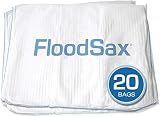
The FloodSax FS5R takes the basic idea of a sandbag and removes one of its biggest inconveniences: the sand.
These lightweight bags contain absorbent material and expand when exposed to water, creating a much heavier barrier that can be positioned across doorways and other vulnerable areas.
You get five 19 x 20-inch bags in this pack.
The main attraction is storage.
Keeping 20 conventional sandbags and a pile of sand in your garage isn’t particularly convenient. Flat sandless flood bags can be stored until severe weather threatens and then activated when required.
Key features:
- Pack of five
- 19 x 20 inches
- Water absorbent
- No sand required
- Lightweight before activation
- Compact storage
- Designed for flood defence
Best for: Keeping in storage as part of an emergency flood kit.
Check the FloodSax Sandless Sandbags on Amazon
2. GaraDry GARADAM Garage Door Flood Barrier – Best Garage Door Flood Barrier


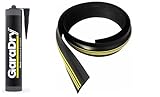

Garage doors can be particularly vulnerable to surface water.
They’re wide, positioned at ground level and often sit at the bottom of a sloping driveway.
The GaraDry GARADAM takes a more permanent approach than temporary sandbags.
It’s a 50mm-high flexible PVC threshold barrier measuring 2.52 metres and is installed across the garage entrance.
The complete kit includes two adhesives.
Once installed, the raised threshold is designed to provide a barrier against water trying to flow underneath the garage door.
Key features:
- 50mm-high barrier
- 2.52m length
- Flexible PVC
- Permanent threshold-style installation
- Two adhesives included
- Designed for garage entrances
Best for: Garages that regularly experience shallow surface-water ingress underneath the door.
View the GaraDry GARADAM Garage Flood Barrier on Amazon
3. VEVOR 12ft Flood Barrier – Best Large Reusable Flood Barrier


If you need to protect a much wider opening, the VEVOR Flood Barrier provides a very different solution.
It’s a 12-foot-long, 12-inch-high PVC water diversion tube.
Instead of filling dozens of individual sandbags, you deploy a long continuous barrier designed to divert or hold back shallow floodwater.
Its reusable PVC construction is a major attraction if your property experiences a recurring flood risk.
A long barrier could be useful across areas such as:
- Garage entrances
- Driveways
- Doors
- Paths
- Gates
- Patio entrances
The continuous design also eliminates many of the gaps that can occur between individual sandbags.
Key features:
- 12ft long
- 12in high
- PVC construction
- Reusable
- Sandbag alternative
- Continuous flood barrier
- Suitable for doors and garages
Best for: Wide entrances and households wanting reusable temporary flood protection.
Check the VEVOR Flood Barrier on Amazon
4. Toilet Stopper for Floods – Best for Backflow Protection


Not all floodwater enters underneath your front door.
During severe flooding, overwhelmed drainage and sewer systems can potentially cause water or sewage to back up through toilets and drains.
A toilet flood stopper is intended to address this very different route into the property.
This isn’t an alternative to an external flood barrier. It’s an additional line of defence aimed at backflow rather than surface water entering through a doorway.
If your home has previously experienced drainage backflow during floods, this is something worth investigating alongside external barriers.
Installation and suitability depend heavily on the individual drainage arrangement, so check the product instructions carefully.
Best for: Properties potentially vulnerable to toilet or drainage backflow during flooding.
View the Toilet Flood Stopper on Amazon
5. Ywkdnf Reusable Canvas Flood Sandbags – Best Traditional Flood Defence
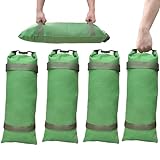
Sometimes the traditional solution is still the most practical.
These Ywkdnf Canvas Flood Sandbags come as a pack of four and can be filled when they’re needed.
The thick canvas construction includes handles, quick-release buckles, double stitching and UV stabilisation.
Unlike single-use emergency bags, they’re designed around repeated use.
The handles are particularly useful because filled sandbags become extremely heavy.
Key features:
- Four-pack
- Heavy canvas construction
- Reusable
- Carrying handles
- Quick-release buckle
- Double stitched
- UV stabilised
- Foldable for storage when empty
Best for: Households wanting traditional reusable flood sandbags that can be stored empty.
Check the Reusable Canvas Flood Sandbags on Amazon
Do Flood Barriers Really Work?
They can, but no portable flood barrier makes a property flood-proof.
The Environment Agency recommends taking steps to reduce the impact of flooding if your property is at risk and identifies flood-resistant doors, barriers, airbrick covers and non-return valves among possible property-level measures.
A temporary barrier is most useful where you’ve identified a likely route through which relatively shallow water could enter.
For example:
Water entering underneath a door → door flood barrier
Water crossing a garage threshold → garage flood barrier
Surface water moving across a driveway → longer diversion barrier
Multiple vulnerable openings → sandbags or sandless bags
Drain/sewer backflow → appropriate backflow protection
If water can simply travel around the ends of your barrier or enter through another opening, protecting one doorway won’t solve the problem.
Sandless Sandbags vs Traditional Sandbags
Traditional sandbags are simple and proven, but they have disadvantages.
You need bags, sand and somewhere to fill them.
They’re also extremely heavy once filled.
Sandless Flood Bags
Products such as FloodSax are stored relatively flat and light.
When exposed to water, the absorbent material expands and the bags become heavier.
Advantages:
- Compact storage
- No sand required
- Lightweight before activation
- Quick emergency deployment
Disadvantages:
- May have limited reuse
- Need water to activate
- Disposal can become an issue after contact with contaminated floodwater
Traditional Sandbags
Fillable sandbags remain incredibly versatile.
Advantages:
- Simple
- Can be stacked
- Easy to position
- Reusable bags are available
- Useful for irregular spaces
Disadvantages:
- Require filling material
- Very heavy when filled
- Labour intensive
- Take up considerable space when prepared
For emergency household storage, sandless bags are particularly convenient. If you have time, materials and recurring flood risk, reusable conventional bags may make more economic sense.
Garage Door Flood Barriers
The garage is often one of the first areas worth examining when preparing a home for heavy rain.
A garage door may be several metres wide, so even a relatively shallow flow of water can find its way underneath.
There are several approaches to a garage door flood barrier.
Garage Threshold Seal
A raised threshold such as the GaraDry GARADAM is permanently installed across the entrance.
This is particularly suitable for recurring shallow water problems.
Temporary Water Barrier
A long water-filled or self-weighting barrier can be deployed across the garage entrance before severe weather.
The VEVOR model in this guide is an example.
Sandbags
Traditional or sandless bags can be arranged across the garage entrance when flooding threatens.
Whatever solution you choose, measure the entire opening and consider whether water can simply travel around either end.
Flood Barriers for Front and Back Doors
Doors are easier to protect because the opening is much narrower than a garage.
Sandless bags can be stacked across the entrance, while purpose-designed removable flood gates are another option.
But don’t forget the frame.
Floodwater doesn’t necessarily enter exclusively underneath a door. Water can penetrate around frames, air bricks and other low-level openings.
If your property has a known flood history, a professional property flood-resilience assessment may identify vulnerabilities that aren’t obvious from looking at the doorway alone.
What About Air Bricks?
Air bricks can provide another entry point for floodwater.
Temporary air-brick covers and self-closing flood-resistant air bricks are available for properties at risk.
However, air bricks perform an important ventilation function.
Don’t permanently seal ventilation openings simply to prevent potential flooding.
Use a solution specifically designed to provide flood protection while maintaining the ventilation the building requires during normal conditions.
Can Floodwater Come Up Through a Toilet?
Potentially, yes.
Flooding can sometimes overwhelm drainage systems, creating a risk of backflow through drains or toilets.
Non-return valves and other backflow-prevention measures may therefore form part of a wider property flood-resilience strategy.
This is why buying twenty sandbags isn’t necessarily a complete flood plan.
You need to consider where the water could enter.
How to Prepare Flood Barriers Before Heavy Rain
The worst time to discover that your barrier doesn’t fit is when water is already coming up the driveway.
If your property is at risk:
- Identify likely entry points in advance.
- Measure doors, garages and other openings.
- Read the barrier’s instructions before an emergency.
- Practise deploying reusable barriers.
- Keep sandless bags somewhere immediately accessible.
- Check drains and gullies where safe and appropriate.
- Move valuable possessions away from low levels.
- Know how to turn off utilities if instructed to do so.
- Sign up for official flood warnings where available.
In England, you can check your long-term flood risk and sign up for Environment Agency flood warnings through GOV.UK.
Never Put Yourself at Risk to Install a Flood Barrier
This is particularly important.
Flood defences should ideally be deployed before floodwater arrives.
Don’t enter fast-flowing or deep floodwater simply to put a barrier in place. Floodwater can hide hazards, become contaminated and exert considerable force.
The Environment Agency advises against walking or driving through floodwater and notes that just 30cm of flowing water can move a car.
Property can be repaired. Don’t risk personal safety trying to save it.
Flood Barrier FAQs
What is the best flood barrier for a home?
It depends on where water is likely to enter. Sandless flood bags are versatile for doors and small openings, while long reusable barriers can protect wider entrances. Permanent threshold systems are particularly useful for garages with recurring shallow-water problems.
Are sandless sandbags better than normal sandbags?
They’re considerably easier to store and don’t require sand. Traditional sandbags can be more versatile and reusable, depending on the bag and whether they’ve been contaminated.
What is the best garage door flood barrier?
For recurring shallow surface water, a permanently installed threshold such as the GaraDry GARADAM is worth considering. For temporary protection across a larger area, a long reusable barrier such as the VEVOR provides another option.
Can I reuse a flood barrier?
Some barriers are specifically designed for repeated use. Others, particularly absorbent products, may have limited reuse. Floodwater can also contain sewage and other contaminants, which affects whether products can safely be handled or reused.
How high should a flood barrier be?
It needs to be appropriate for the expected flood depth and property. Don’t assume a 50mm threshold will protect against 300mm of floodwater simply because it’s marketed as a flood barrier.
Do I still need flood insurance if I have barriers?
Flood barriers reduce risk; they don’t eliminate it. Property flood resilience should be considered alongside appropriate insurance rather than as a substitute for it.
Which Flood Barrier Should You Buy?
For an emergency product you can keep stored until severe weather threatens, we’d choose the FloodSax FS5R Sandless Sandbags. They’re compact before activation and don’t require you to keep a supply of sand at home.
For a garage with a recurring problem underneath the door, the GaraDry GARADAM 50mm Threshold Seal provides a more permanent solution.
View the GaraDry Garage Flood Barrier on Amazon
And for a wide entrance where you want something temporary and reusable, the 12ft VEVOR Flood Barrier is the most interesting option in this selection.
View the VEVOR Flood Barrier on Amazon
The most important buying decision isn’t really which flood barrier is best. It’s identifying where water is likely to enter your property and choosing a barrier specifically suited to that opening and the expected depth of water.
If your home is genuinely at risk, don’t wait until a severe weather warning appears to discover whether your flood defences actually fit.


