
Best Moisture Meter for Damp: How to Check Walls, Wood and Floors
A damp patch on a wall doesn’t necessarily tell you where the moisture is coming from. Is it condensation, a leaking pipe, penetrating damp or simply a wall that hasn’t fully dried after a previous problem?
A moisture meter can help you investigate.

Also known as a damp meter or moisture detector, these relatively inexpensive handheld devices can be used to compare moisture levels in walls, timber, floors and other building materials. They’re particularly useful when investigating mould, checking whether a previously damp area is drying or comparing a suspicious section of wall with a dry one elsewhere in the room.
However, moisture meters aren’t magic damp-diagnosis machines. The reading needs to be interpreted alongside what you can actually see and know about the building.
Here are four moisture meters worth considering for DIY damp investigations and home maintenance.
Best Moisture Meters at a Glance
| Moisture Meter | Type | Best For |
|---|---|---|
| Dryzone Moisture Meter Detector | Pin-type | Best overall for home damp investigations |
| 8-Mode Moisture Dampness Meter | Pin-type | Best multi-purpose budget meter |
| Kiprim WM01 Moisture Tester | Pinless | Best non-destructive moisture meter |
| Brennenstuhl Moisture Detector MD | Pin-type | Best simple moisture meter |
What Is a Moisture Meter?
A moisture meter is a handheld measuring device used to assess moisture in materials.
They’re commonly used on:
- Wood
- Plaster
- Masonry
- Drywall
- Floors
- Firewood
- Building materials
Many inexpensive damp meters use two small metal pins. Push these against or into the material and the meter measures electrical resistance between them.
Because water affects electrical conductivity, the device can use that information to provide an indication of moisture.
A pinless moisture meter works differently. Rather than puncturing the material, it takes readings beneath the surface using an electromagnetic sensor.
This makes pinless meters attractive when you don’t want to leave tiny holes in a decorated wall or wooden floor.
Can a Moisture Meter Detect Damp in Walls?
Yes, but there’s an important qualification.
A moisture meter can help identify differences in moisture readings, but a high reading doesn’t automatically prove that you have rising damp, penetrating damp or a leaking pipe.
This is especially important with masonry.
Electrical moisture meters can react to salts and other conductive materials within plaster and masonry, potentially producing high readings that don’t directly correspond to the actual percentage of water within the wall.
For DIY use, it’s therefore often better to use the meter comparatively.
Take several readings across a wall.
If most of the wall produces relatively low readings but one particular section consistently reads much higher, you’ve found something worth investigating.
You can then monitor that area over several days or weeks.
1. Dryzone Moisture Meter Detector
Best moisture meter for assessing household damp
Buy the Dryzone Moisture Meter Detector
Dryzone specialises in damp-proofing and moisture-control products, making its Moisture Meter Detector an obvious option for investigating damp around the home.
It’s designed for testing materials including wood, masonry and other building surfaces.
For homeowners, the big attraction is simplicity. You can use it to compare different areas of a wall or check whether a previously damp surface appears to be drying.
For example, suppose you’ve discovered black mould behind a wardrobe on an external bedroom wall.
Take readings in the affected area and then compare them with readings from sections of the same wall that appear dry. Repeat the measurements periodically after improving ventilation or dealing with the suspected moisture source.
The meter isn’t providing a professional damp survey, but it gives you additional information rather than relying purely on whether the wall feels damp.
Best for: Homeowners investigating damp walls, plaster, masonry and timber.
Check the latest price on Amazon
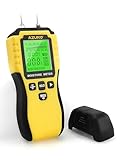
2. 8-Mode Pin-Type Moisture Dampness Meter
Best multi-purpose moisture meter
If you want something that can be used for several different jobs, this 8-mode pin-type moisture meter is an interesting budget option.
It’s designed for testing wood, walls, firewood, logs, floors, caravans, drywall and other building materials.
The backlit LCD display makes readings easier to see in dark corners, while an audible alert provides another indication when moisture levels are elevated.
The multiple modes are useful because different materials behave differently. A piece of timber isn’t the same as a plastered wall, so having material-specific settings can provide more useful comparative readings.
It’s also potentially handy for caravan and motorhome owners, where hidden water ingress can cause expensive damage if it goes unnoticed.
Best for: DIY, firewood, walls, floors, caravans and general-purpose moisture testing.
Check the latest price on Amazon
3. Kiprim WM01 Non-Destructive Pinless Moisture Tester

Best pinless moisture meter
Buy the Kiprim WM01 Moisture Tester
Don’t fancy pushing metal pins into your freshly decorated wall?
The Kiprim WM01 provides an alternative.
It’s a non-destructive pinless moisture meter designed for checking materials including wood, floors and walls without creating pinholes.
That’s particularly useful when investigating a large area because you can take dozens of readings without leaving a trail of tiny marks behind you.
A pinless meter can also help you map a damp area.
Move across the wall taking readings at regular intervals. If readings increase as you approach a particular location and then decrease again, you’ve potentially identified the extent of the moisture-affected area.
That doesn’t necessarily tell you the cause, but it gives you something much more useful to investigate.
Best for: Decorated walls, wooden floors and non-destructive damp investigations.
Check the latest price on Amazon
4. Brennenstuhl Moisture Detector MD

Best straightforward moisture detector
Buy the Brennenstuhl Moisture Detector MD
If you don’t need lots of different modes and features, the Brennenstuhl Moisture Detector MD offers a relatively straightforward approach.
It’s designed for measuring moisture in wood and building materials and displays the reading on an LCD screen.
That makes it suitable for basic DIY jobs such as checking timber, investigating suspicious damp patches or comparing moisture levels around a room.
Brennenstuhl is also a well-established German manufacturer of electrical and workshop equipment, which may appeal to buyers who prefer a recognisable European tool brand.
Best for: Straightforward DIY damp and timber checks.
Check the latest price on Amazon
Pin vs Pinless Moisture Meter: Which Is Better?
Neither design is automatically better for every job.
Pin moisture meters
A pin meter takes a reading between two electrodes inserted into or pressed against the material.
Advantages include:
- Relatively inexpensive
- Good for timber
- Precise point readings
- Useful for comparing small areas
The downside is that the pins can leave tiny holes.
Pinless moisture meters
Pinless models scan beneath the surface without penetrating it.
Advantages include:
- No holes
- Fast scanning
- Easy to compare large areas
- Good for finished walls and floors
This makes the Kiprim WM01 particularly appealing if you’re investigating damp around a decorated home.
How to Use a Moisture Meter to Investigate Mould
Moisture meters become especially useful when mould keeps returning.
Suppose you’ve cleaned black mould from a bedroom wall. Before immediately repainting, take several moisture readings across the affected area and compare them with dry areas.
Then investigate the likely source.
If condensation is responsible, improve ventilation, heating or humidity control and monitor the readings.
If there’s an unexplained localised wet area, investigate whether water could be entering from outside or leaking from plumbing.
Once the underlying problem has been addressed and the surface has dried, you can consider repainting.
For suitable products and preparation advice, see our guide to the best anti mould paint and how to remove mould from walls.
Can a Moisture Meter Tell You If You Have Rising Damp?
Not by itself.
This is one of the biggest mistakes people can make with cheap damp meters.
A high meter reading near the bottom of a wall isn’t automatically proof of rising damp.
The reading needs to be considered alongside other evidence such as staining, deterioration of plaster, salts, the condition of the damp-proof course and the pattern and location of the moisture.
If you’re considering expensive remedial work, get the problem properly diagnosed rather than making the decision solely from a £20 handheld meter.
Are Cheap Moisture Meters Worth Buying?
For DIY investigation, yes.
Their greatest value isn’t necessarily providing a definitive moisture percentage. It’s helping you compare and monitor.
You can answer questions such as:
Is this section wetter than the rest of the wall?
Does the moisture appear concentrated around a window?
Is the wall getting drier after improving ventilation?
Does moisture increase after heavy rain?
Is a previously damp area ready for further investigation or decorating?
Used this way, even an inexpensive moisture meter can be an extremely useful home-maintenance tool.
Which Is the Best Moisture Meter for Damp?
For general household damp investigation, the Dryzone Moisture Meter Detector is my overall pick because it’s specifically aimed at wood, masonry and other building materials.
The 8-Mode Pin-Type Moisture Meter offers more versatility if you also want to check firewood, floors or a caravan.
For finished walls and floors, I’d choose the Kiprim WM01 Pinless Moisture Tester. Being able to scan multiple areas without making holes is a significant advantage.
Finally, the Brennenstuhl Moisture Detector MD is a good choice if you simply want a straightforward meter from an established tool manufacturer.
Most importantly, remember what you’re buying.
A moisture meter is an investigative tool, not a professional damp survey in your pocket. Use it to compare areas, identify unusual moisture patterns and monitor whether a problem is improving.
Combined with a little detective work, however, it can help you work out why your wall is damp before you clean the mould, reach for the paint roller and hope the problem doesn’t come back.

