
Best Winter Walking Spikes and Ice Cleats for Snow and Ice
Compare ice cleats, snow grips, Yaktrax and crampons for walking on icy pavements, snowy trails and winter hikes.
When pavements and footpaths freeze, an ordinary pair of walking shoes can suddenly feel more like ice skates.
Winter walking spikes, also known as ice cleats, snow grips or traction cleats, fit over your existing shoes or boots to provide additional grip on snow and ice.
They’re useful for everything from walking the dog on a frosty morning to hiking snow-covered trails. However, there’s a big difference between lightweight Yaktrax-style walking grips and aggressive spiked crampons intended for more demanding winter terrain.
We’ve compared five options to help you choose the right amount of traction.
Best Winter Walking Spikes: Quick Picks
1. YAKTRAX Heavy Duty Traction Hiking Cleats – Best for Winter Hiking


The YAKTRAX Heavy Duty Traction Hiking Cleats are our pick if you’re looking for something more substantial than basic pavement grips.
They’re designed specifically to provide additional traction in ice and snow, with a durable rubber strap that fits the traction system around your footwear.
The heavier-duty design makes these more appropriate for winter walking and hiking than a very lightweight commuter grip.
That doesn’t turn ordinary walking boots into technical mountaineering footwear, but for winter paths and trails where compacted snow and ice make normal soles slippery, additional traction can make a significant difference.
Key features:
- Heavy-duty traction design
- Designed for ice and snow
- Durable rubber strap
- Fits over existing footwear
- Reusable
- Designed with hiking in mind
Best for: Winter walks and hikes where you expect prolonged snow or icy surfaces.
Check the YAKTRAX Heavy Duty Hiking Cleats on Amazon
2. Aliglow Ice Snow Grips – Best Value Ice Cleats
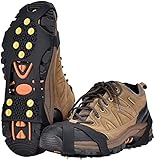
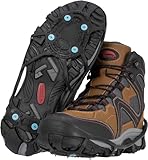
The Aliglow Ice Snow Grips provide a straightforward set of traction cleats that stretch over your existing footwear.
They’re designed for both shoes and boots and add anti-slip traction underneath the foot.
The big attraction of this type of product is simplicity.
You don’t need specialist winter boots just because the pavements have frozen overnight. Keep a pair of ice grips available and fit them over suitable everyday footwear when conditions deteriorate.
They’re also small enough to carry in a bag when you’re unsure whether you’ll encounter ice.
Key features:
- Fits over shoes and boots
- Spiked traction
- Designed for snow and ice
- Portable
- Removable
- Reusable
Best for: Occasional icy weather and buyers wanting inexpensive additional winter grip.
View the Aliglow Ice Snow Grips on Amazon
3. YAKTRAX Walk – Best Ice Grips for Everyday Walking

Not everybody needs aggressive spikes.
The YAKTRAX Walk Ice & Snow Grips use 1.2mm steel coils wrapped around the traction frame rather than prominent metal spikes.
The elastic rubber system stretches around a walking shoe or boot and the steel coils provide additional traction against snow and ice.
This makes the Yaktrax Walk particularly interesting for ordinary winter activities such as:
- Walking the dog
- Commuting
- Walking to the shops
- School runs
- Winter sightseeing
- Pavement walking
They’re less aggressive than the large hiking crampons further down this guide, which can actually be an advantage for everyday use.
Key features:
- 1.2mm steel coils
- Elastic rubber construction
- Fits over walking footwear
- Designed for ice and snow
- Lightweight
- Easy to carry
Best for: Everyday walking during frost, snow and icy weather.
Check the YAKTRAX Walk Ice & Snow Grips on Amazon
4. 24/32-Spike Crampons – Best for Maximum Winter Traction


If you’re heading onto more challenging winter trails, a substantially more aggressive traction system may be appropriate.
These hiking crampons are available with multiple stainless-steel spikes and are designed to stretch over hiking shoes and boots.
Longer and more numerous spikes can penetrate snow and icy surfaces more aggressively than lightweight urban walking grips.
They’re marketed for activities including walking, jogging, climbing and hiking, although we’d be cautious about assuming that generic traction cleats are suitable for technical climbing or mountaineering.
Key features:
- 24/32-spike options
- Stainless-steel spikes
- Designed for shoes and boots
- Heavy-duty traction
- Suitable for snow and ice
- Flexible attachment system
Best for: Snowy trails and winter hiking where more substantial traction is required.
View the 24/32-Spike Hiking Crampons on Amazon
5. Stainless Steel Ice Cleats – Best General-Purpose Spikes


These Ice Traction Shoe and Boot Cleats combine stainless-steel spikes with a flexible silicone-style frame.
They fit over existing shoes or boots and are intended to provide additional grip when walking across snow and ice.
This makes them an interesting middle ground if you want actual spikes underneath your feet without moving to one of the largest multi-spike hiking designs.
Key features:
- Stainless-steel spikes
- Flexible construction
- Fits shoes and boots
- Anti-slip design
- Suitable for winter walking and hiking
- Reusable
Best for: General winter walking where steel spikes are preferable to lightweight coils.
Check the Stainless Steel Ice Cleats on Amazon
Do Ice Cleats Really Work?
Yes, when they’re matched to appropriate conditions.
The principle is straightforward.
Normal shoe soles rely heavily on rubber tread making contact with the ground. On hard ice, that contact can provide very little friction.
Metal spikes or coils create additional points of traction against the frozen surface.
That can make walking on ice or compacted snow considerably more secure.
However, winter traction aids don’t make you invincible.
You should still:
- Walk carefully
- Shorten your stride
- Avoid sudden changes of direction
- Use handrails where available
- Keep your hands available for balance
- Avoid obviously dangerous slopes
- Choose routes appropriate to the conditions
Think of ice cleats as additional traction, not permission to ignore the ice.
Yaktrax vs Ice Cleats: What’s the Difference?
Yaktrax has become one of the best-known names in removable winter traction, but there are different types of Yaktrax.
The Yaktrax Walk uses steel coils.
Other traction devices use actual spikes or cleats.
Coiled Traction
Products such as the Yaktrax Walk provide numerous contact points across the sole.
They’re particularly appealing for:
- Pavements
- Paths
- Everyday winter walking
- Compacted snow
- Mixed urban use
Spiked Ice Cleats
Metal spikes penetrate icy surfaces more aggressively.
They’re particularly attractive for:
- Trails
- Hard-packed snow
- More persistent ice
- Steeper winter paths
However, aggressive spikes can be awkward and potentially slippery on hard indoor surfaces.
Choose according to where you’ll actually be walking rather than automatically buying the product with the biggest spikes.
Winter Walking Spikes vs Crampons
The word crampon gets used rather loosely online.
There is an important difference between lightweight traction aids and technical mountaineering crampons.
Walking Spikes/Microspikes
These are flexible devices that fit over ordinary walking or hiking footwear.
They’re designed to provide additional traction on icy paths and snow.
They’re ideal for many recreational winter walks.
Technical Crampons
Proper mountaineering crampons are much more specialised equipment designed for serious winter mountain terrain and compatible boots.
They aren’t simply a more expensive version of pavement ice grips.
If you’re tackling steep frozen mountain terrain where a fall could have serious consequences, don’t assume inexpensive pull-on Amazon ice cleats are an appropriate substitute for proper mountaineering equipment, skills and judgement.
Best Ice Cleats for Pavement Walking
For everyday pavements, we’d lean towards something relatively lightweight such as the YAKTRAX Walk.
You want enough traction to make frozen paths safer without wearing huge spikes designed for snowy trails.
The coiled design also spreads traction across a substantial portion of the sole.
View the YAKTRAX Walk on Amazon
But remember that conditions can change quickly.
An icy pavement may lead directly into a supermarket with smooth tiled flooring.
That’s where removable traction matters.
Take Your Ice Cleats Off Indoors
This is important.
Metal spikes and coils designed to grip ice can be slippery on hard indoor surfaces.
They may also damage wooden flooring and other surfaces.
If you walk into a shop, café, train station or home, remove the traction aids where appropriate rather than assuming they’ll continue to provide grip.
The same applies when walking on stretches of completely clear pavement.
Products should be used according to the manufacturer’s instructions and the surface they’re designed for.
Best Winter Walking Spikes for Hiking
For recreational hiking on snowy paths, we’d favour either the YAKTRAX Heavy Duty Hiking Cleats or one of the multi-spike designs.
Which one you choose depends on the terrain.
For relatively gentle winter trails with intermittent ice and snow, you may not need an extremely aggressive set of spikes.
For more persistent compacted snow and ice, deeper steel traction becomes more attractive.
But terrain matters as much as the product.
A pleasant summer footpath can become a completely different proposition under snow and ice.
Can You Run in Ice Cleats?
Some traction products are marketed for jogging or running, but check the manufacturer’s intended use carefully.
Running places different forces through the device compared with walking.
If you want winter running spikes, look for a product specifically suitable for running rather than simply putting heavy hiking cleats over your normal trainers.
And slow down.
Extra traction doesn’t eliminate hidden ice, uneven frozen ground or the possibility of snow covering obstacles.
How Should Winter Walking Spikes Fit?
Fit is crucial.
A traction aid should stretch securely around your footwear without moving excessively underneath your foot.
Before heading outside:
- Check the manufacturer’s size chart.
- Fit the cleats to the shoes or boots you actually intend to wear.
- Make sure the traction elements sit correctly underneath the sole.
- Check that front and rear attachments are secure.
- Walk a short distance somewhere safe.
- Recheck the fit after several minutes.
If the traction system repeatedly slides sideways or comes away from the shoe, stop and adjust it.
What to Look for When Buying Ice Cleats
Type of Traction
Choose between coils, smaller studs and more aggressive spikes according to the conditions.
Footwear Compatibility
Check whether the product fits your walking shoes, trainers or hiking boots.
Sizing
Don’t assume one size fits all genuinely means every shoe.
Check the manufacturer’s sizing information.
Ease of Removal
If your winter walk includes shops, public transport or indoor spaces, being able to remove the cleats quickly is valuable.
Durability
Look at the material used for both the traction elements and the flexible harness.
Cold temperatures repeatedly stretch the material, while spikes encounter stone and tarmac as well as snow.
Weight
Large steel spikes provide aggressive traction but are heavier to carry when conditions improve.
When Should You Use Ice Cleats?
Ice cleats are most useful when the problem is surface traction.
That includes:
Black ice: particularly dangerous because it can be difficult to see.
Compacted snow: repeated footsteps can transform snow into a hard slippery surface.
Frozen paths: rural footpaths can remain icy long after roads have cleared.
Frost: shaded pavements and paths may remain slippery well into the day.
Snow-covered trails: spikes can improve grip where ordinary boot tread struggles.
If conditions are genuinely dangerous, however, the safest decision can simply be not to make the journey.
Winter Walking Spikes FAQs
What are the best winter walking spikes?
For everyday pavement walking, we’d choose the YAKTRAX Walk. For winter hiking and trails, we’d consider the YAKTRAX Heavy Duty Hiking Cleats or a more aggressive multi-spike design.
Do ice cleats work on black ice?
Metal traction elements can provide substantially more grip than ordinary rubber soles on icy surfaces. You should still walk cautiously because no traction device completely removes the risk of slipping.
Can you wear ice cleats on pavement?
Yes, when the pavement is icy or snow covered and the manufacturer specifies that use. Remove aggressive spikes when they’re no longer needed, particularly before entering buildings.
Are Yaktrax good for snow?
Yaktrax products are specifically designed to increase traction in ice and snow. Different models provide different levels and types of traction.
Are ice cleats the same as crampons?
Not necessarily. Lightweight pull-on winter walking spikes are often casually described as crampons, but technical mountaineering crampons are specialist equipment for much more serious terrain.
Can I put winter spikes over trainers?
Many lightweight traction products fit over walking shoes and trainers, but check the manufacturer’s sizing and footwear guidance.
Should I buy spikes or coils for ice?
For everyday walking on relatively level icy paths, coils or smaller traction points can be convenient. Larger steel spikes become more attractive for persistent ice, compacted snow and winter trails.
Which Winter Walking Spikes Should You Buy?
For ordinary winter walking, the YAKTRAX Walk Ice & Snow Grips are our first choice. The 1.2mm steel-coil system provides additional winter traction without the aggressive spikes of a hiking-oriented design.
Check the YAKTRAX Walk on Amazon
For winter trails, we’d step up to the YAKTRAX Heavy Duty Traction Hiking Cleats.
View the YAKTRAX Heavy Duty Hiking Cleats on Amazon
And when you’re specifically looking for more aggressive traction on persistent snow and ice, the 24/32-spike hiking crampons offer substantially more metal contact points.
View the Multi-Spike Hiking Crampons on Amazon
The key isn’t buying the biggest spikes you can find. Match the traction to the terrain.
For an icy walk to the shops, lightweight grips may be all you need. For snow-covered winter trails, more substantial spikes become attractive. And for technical mountain terrain, move beyond everyday walking cleats and use appropriate winter mountaineering equipment and expertise.


