
World Space Week 2026: Activities, Stargazing and the Rocket Revolution
World Space Week returns from 4–10 October 2026, bringing together schools, families, astronomy enthusiasts, museums, space organisations and scientists for a global celebration of space exploration.

If you are looking for World Space Week activities, this is a great excuse to get outside with a telescope, watch a rocket launch, build your own model spacecraft or simply spend an evening learning to identify the planets and constellations.
The theme for World Space Week 2026 is Rocket Revolution, focusing attention on rockets, launch technology and the changing ways humans are gaining access to space.
Whether you searched for international spaceweek, national space week or simply want some fun activities for Space Week, here are some ideas for celebrating in 2026.
When Is World Space Week 2026?
World Space Week takes place every year from 4 October to 10 October.
The dates commemorate two important moments in the history of space exploration:
- 4 October 1957 – Sputnik 1, the first human-made satellite to orbit Earth, was launched.
- 10 October 1967 – the Outer Space Treaty entered into force, establishing important principles governing the exploration and peaceful use of outer space.
World Space Week was declared by the United Nations General Assembly in 1999 and has since developed into an international celebration of space science and technology.


What Is the World Space Week 2026 Theme?
The theme for 2026 is Rocket Revolution.
It’s particularly appropriate at a time when the technology used to reach space is changing rapidly.
For much of the space age, launching something into orbit required the resources of a major national government. Today, commercial launch companies, universities, start-ups and an increasing number of countries are involved in spaceflight.
Reusable rockets are also changing the economics of launches, while new spacecraft are being developed for missions to the Moon and beyond.
That makes rockets an obvious starting point when you’re thinking about activities for Space Week.

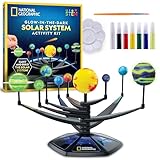
World Space Week Activities for 2026
You don’t need access to a space centre to participate in international spaceweek. Some of the best activities can be done at school, at home or in your back garden.
1. Have a Stargazing Night
Perhaps the easiest World Space Week activity is simply to go outside after dark.
Find somewhere away from bright streetlights and give your eyes around 20 minutes to adapt to the darkness.
Even without a telescope, you may be able to identify major constellations, bright planets and passing satellites.
A free astronomy app can make this much easier. Point your phone towards the sky and use it to work out what you’re looking at or build a scale model of our Milky Way using the:LEGO Art The Milky Way Galaxy 31212: Build Your Own Galactic Wall Art
If you’d like a closer look, read our guide to the Best Beginner Telescope for Adults: Starter Telescopes for Astronomy and Planet Viewing.
2. Get Your First Telescope
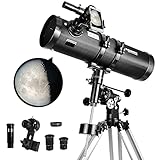
World Space Week could also be the perfect excuse to finally buy a telescope.
You don’t necessarily need an enormous or particularly expensive telescope to start exploring the night sky.
A Newtonian reflector can be a good option for beginners because its relatively large aperture can gather plenty of light for viewing the Moon, planets and brighter deep-sky objects.
One option is the 130EQ Newtonian Reflector Telescope on Amazon.
Another established option is the Celestron 31045 AstroMaster 130EQ Newtonian Reflector Telescope.
A 130mm reflector provides considerably more light-gathering ability than simply observing with the naked eye and can open up a much wider range of astronomical targets.
3. Try a Smart Telescope
Astronomy has changed considerably in the smartphone era.
Traditional telescopes require you to locate objects and learn how to use the mount. Smart telescopes can automate much of this process, potentially making astronomy considerably more accessible to beginners.
The DWARFLAB Dwarf Mini on Amazon is a compact smart telescope designed to make observing and astrophotography easier.
A smart telescope can therefore make an interesting World Space Week activity for families. Instead of taking turns looking through an eyepiece, you can capture and share images of objects in the night sky.
4. Build a Rocket or Spacecraft
With Rocket Revolution as the World Space Week 2026 theme, building a model rocket or spacecraft is one of the most appropriate activities you can try.
And this doesn’t have to be just for children.
There are now some surprisingly detailed space building kits aimed at adults and older teenagers.
LEGO NASA Artemis Space Launch System
The LEGO Icons NASA Artemis Space Launch System Set is particularly appropriate for World Space Week 2026.
Rather than recreating a spacecraft from the early days of the space race, this model is based on NASA’s modern Artemis programme and Space Launch System.
The kit includes an SLS rocket, mobile launch tower and Orion spacecraft. Once completed, it’s intended as a display model, making it a good weekend World Space Week project that can remain on a desk or shelf afterwards.
It’s also a natural starting point for learning about the Artemis programme and NASA’s return to human lunar exploration.
Build a Space Shuttle
If you prefer the Space Shuttle era, the 616-Piece Space Shuttle Building Blocks Set provides another hands-on Space Week activity.
The kit includes a miniature rocket and launch-pad-style display and combines model building with an opportunity to learn more about the history of crewed spaceflight.
You could turn the build into a larger Space Week project by researching famous Space Shuttle missions, including the deployment and servicing of the Hubble Space Telescope.

ROKR 3D Wooden Space Shuttle
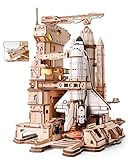
For something a little different, the ROKR 3D Wooden Puzzle Space Shuttle Model Kit combines a spacecraft model with a wooden construction puzzle.
Rather than conventional plastic building blocks, you construct the model from precision-cut wooden components.
That makes it an interesting World Space Week activity for adults as well as older children who enjoy engineering, model making and puzzles.
Building a Shuttle model can also lead to some interesting questions. Why did the Space Shuttle need an enormous external fuel tank? What did the two solid rocket boosters do? And how could the orbiter return from space and land on a runway?
5. Build and Launch a Model Rocket
If you would rather build something that actually flies, try a paper, air-powered or water rocket.
For younger children, this could be as simple as making paper rockets and seeing whose design travels furthest.
Older children can investigate air-powered or water rockets and experiment with:
- rocket mass
- fin size and position
- nose shape
- launch angle
- air pressure
- aerodynamics
Schools can turn this into a proper STEM experiment by asking pupils to predict which design will travel furthest before testing their theories.
You could even run a small Space Week rocket competition, with categories for greatest distance, highest flight or most innovative design.
Safety should always come first, particularly with pressurised or commercially produced model rockets. Follow the manufacturer’s instructions and use a suitable open outdoor space.
6. Watch a Real Rocket Launch
You don’t have to launch your own rocket.
Another of the easiest World Space Week activities is watching a real launch online such as the Artemis Space Launched screened by NASA on youtube.
Modern rocket launches are regularly streamed live, often allowing viewers to follow the countdown, ignition, lift-off, stage separation and deployment of a spacecraft or satellite.
For children, it provides an opportunity to investigate a deceptively simple question:
How does a rocket actually get into space?
You can explore thrust, gravity, orbital velocity, rocket stages and why reaching orbit involves much more than simply travelling vertically upwards.

7. Hold a Rocket Design Competition
For a classroom activity requiring virtually no equipment, challenge children to design the rocket of the future.
Give them a mission first.
Perhaps their spacecraft must:
- deliver astronauts to the Moon
- transport equipment to Mars
- launch a satellite
- collect an asteroid sample
- supply a future lunar base
- carry tourists into orbit
They then have to explain how their rocket would accomplish the mission.
It’s an easy way of combining science with engineering, art and creative thinking and makes an excellent choice for schools looking for inexpensive activities for Space Week.
8. Learn to Spot the International Space Station
One of the most impressive spacecraft in the sky doesn’t require a telescope at all.
Under the right conditions, the International Space Station can appear as an extremely bright point of light moving steadily across the sky.
Unlike an aircraft, it doesn’t have flashing navigation lights.
Finding out when the ISS will next pass overhead and then going outside to spot it is one of the simplest World Space Week activities, particularly for younger children.
And there’s something rather extraordinary about watching it once you realise that people are living and working inside that tiny moving point of light.
9. Learn How to Watch a Meteor Shower
Meteor watching is another branch of astronomy that requires virtually no equipment.
In fact, a telescope can make meteor watching more difficult because it dramatically reduces the amount of sky you can see.
A reclining chair, warm clothes and a dark location may be all you need.
Our guide to How to View a Meteor Shower Tonight: Perseids, Geminids & Leonids explains how to find a good viewing location, when to look and how to photograph meteors.
10. Make a Scale Model of the Solar System
We all know the planets are a long way apart, but diagrams in books rarely convey just how empty the Solar System really is.
Creating a scale Solar System can demonstrate those distances much more effectively.
Choose objects of different sizes to represent the planets and then calculate how far apart they would need to be at the same scale.
You’ll quickly discover that fitting an accurate model into a classroom isn’t easy.
That’s the point.
Space is enormous.
For older children, make the challenge harder by asking them to calculate both the relative sizes of the planets and the distances between their orbits.
11. Try an Astrophotography Challenge
Modern smartphones make basic astrophotography much easier than it once was.
For World Space Week, try photographing:
- the Moon
- a bright planet
- constellations
- star trails
- the Milky Way
- a satellite passing overhead
If you have access to a telescope and smartphone adapter, you can also experiment with photographing the Moon through the telescope.
It may take several attempts to get a decent photograph, but that’s part of the fun.
World Space Week Activities for Schools
Schools can use World Space Week to introduce STEM subjects through practical challenges rather than conventional classroom lessons.
Possible activities for Space Week include building paper rockets, designing a Moon base, making a scale Solar System, holding a space quiz, creating astronaut survival plans or investigating how astronauts eat, sleep and exercise in microgravity.
Teachers could also divide a class into teams and give each one a fictional space mission.
One team might have to reach Mars. Another could design a lunar research station. Another might be responsible for supplying astronauts with food, oxygen and water.
You could even introduce budgets. Each team gets a fictional £1 billion but has to choose between larger rockets, more astronauts, scientific equipment, additional fuel or backup systems.
It turns space exploration into a problem-solving exercise rather than simply a science lesson.
World Space Week Activities at Home
Parents don’t need to organise an elaborate project either.
A simple Space Week evening could involve watching a programme about space exploration, building the LEGO Artemis rocket or ROKR Space Shuttle, and then heading outside once it gets dark.
See if you can identify the Moon, a planet or a major constellation.
If the International Space Station is making a visible pass, try spotting that too.
Children could then draw what they saw or design their own spacecraft for travelling to the Moon or Mars.
It’s inexpensive, educational and, importantly, doesn’t feel too much like homework.
Is National Space Week the Same as World Space Week?
The terminology can sometimes be confusing.
People searching for national space week may be looking for space-related events taking place within their own country, while World Space Week is the internationally recognised celebration held every year from 4–10 October.
In the UK, schools, universities, astronomy clubs, museums, community groups and individuals can all use the week as an opportunity to organise their own space-themed events and activities.
So if you’re searching for national space week activities, it’s worth also looking for World Space Week events taking place locally.
Why Celebrate World Space Week?
Space science can sometimes feel remote from everyday life, but space technology is woven into modern society.
Satellites contribute to navigation, communications, weather forecasting, environmental monitoring and scientific research.
World Space Week provides an opportunity to explore those technologies while also looking towards what might come next.
And perhaps that’s why the Rocket Revolution theme is particularly interesting.
The first space race was dominated by governments and a handful of astronauts. The next stage of space exploration involves a much broader mixture of countries, commercial companies, universities, scientists and engineers.
For children celebrating World Space Week today, some of the spacecraft they build as LEGO models may represent technology that could play a role in real missions during their lifetimes.
World Space Week 2026: Look Up
You don’t need to build a rocket to enjoy World Space Week.
Go outside.
Look at the Moon.
Find Jupiter or Saturn.
Watch the International Space Station cross the sky.
Try photographing the stars.
Build a spacecraft like the LEGO Icons NASA Artemis Space Launch System, or the LEGO Icons Project Hail Mary Spaceship
Or spend an evening looking through a telescope with your children.
World Space Week runs from 4–10 October 2026, but the best result of the week might be discovering an interest that keeps you looking upwards long after 10 October.
Whether you call it World Space Week, international spaceweek or national space week, it’s a good excuse to switch off the television, step outside and explore what’s above us.
