
Becoming a Music Teacher: A Short Guide
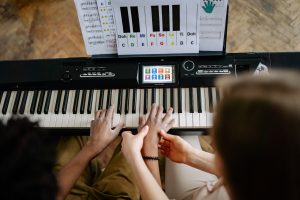 The national appetite for learning a musical instrument has increased rapidly in recent years, with the coronavirus pandemic indirectly leading to over 1 million adults picking up a new musical instrument as a hobby. The market is a lucrative one for pre-established musicians, leading to many considering picking up music tutelage full-time. If you’ve expressed interest in teaching music before, where might you start?
School or Self-Employed?
To start with, it is important to understand the key opportunities available to those hoping to start teaching music. There are two principal avenues: teaching music professionally in a school, and teaching music as a private tutor. While both are serious endeavours and viable full-time careers, there are key differences that may have a major impact on your eventual decision.
For one, becoming a teacher in a school can require a long process of education and training, and can also require you to adopt additional teaching and child management skills. Work in a school can be uniquely stressful, especially when it comes to the managing of official curricula but can otherwise be a great option for guaranteed income and minimal administration.
Meanwhile, teaching privately can afford much more freedom to you as a tutor. You can choose your hours, your class sizes and even your individual tutees. You can cater your curriculum to your own tastes and choose whether or not to help others work towards qualifications. The downside is that you will be entirely in charge of your own finances, which can often be dependent on the seasons.
What Qualifications Do You Need?
Strictly speaking, you do not need a qualification in order to teach music. All you really need is demonstrable skill in your instrument or discipline of choice, and adequate understanding to coach others in your curriculum.
However, in order to teach music at a school or learning facility, you will likely need to obtain a PGCE, which is a postgraduate teacher training qualification that enables you to apply for work as a teacher. There are other routes to teaching, but they often require years of work and training as an assistant.
For freelance teaching, qualifications are not necessary, but can be helpful in attracting students. More importantly, if you’re intending to teach instrument grades you will need to be able to demonstrate ability at that grade – best achieved by attaining said grades through examination.
Administration
Whether teaching in a school or privately, you will likely need to undergo a DBS check to get cleared for working with children. There are other provisions you should also consider as a music teacher, from insurance coverage to financial advice and even union membership. In engaging with your administrative business needs early, you can ensure your focus remains on the teaching of your tutees.
Promoting Yourself
As a freelance music teacher, it can be difficult to build a profile. There are many using their music skills to subsidise full-time work and growing a regular full-time income from music tutelage can be difficult with so many part-timers offering services in local communities.
A great first step can be to find a physical teaching space from which to operate. Many areas of the UK have learning hubs for vocations, in which rooms can be rented for this very purpose. With a physical base, you can ingratiate yourself with the scene and meet more people who may have an interest in your services.
You would also do well to advertise your services digitally. Online teaching has become something of a norm and can allow you to expand your reach and find new tutees with relative ease. There are gig-economy platforms you can use to advertise yourself, while local social media platforms can help you get your name out.
Related Articles
Film music composer roles and responsibilities, How do I become?
