
My Emergency Food List Stockpile: Best Survival Food, Water Storage and Emergency Supplies
Build an emergency food stockpile with long lasting survival food, canned food, freeze-dried meals, water storage and emergency water filtration. My practical emergency food list for floods, snow, power cuts and other disasters.
If an emergency left you without electricity, mains water or easy access to shops for several days, what would you actually eat and drink?
That’s the question behind my emergency food list.
I’ve deliberately avoided building a stockpile entirely around specialist survival food packages. Instead, I’ve included a mixture of long-life emergency rations, freeze-dried meals, ordinary canned foods, vegetables, protein, high-energy sweets and several ways to store and purify water.
The UK Government’s Prepare campaign recommends keeping several days’ worth of food that doesn’t need cooking, together with at least three litres of drinking water per person per day, while noting that around ten litres per person per day is more comfortable because it also allows for basic cooking and hygiene.
My approach goes a little further because I want a stockpile that could cope with a prolonged power cut, flooding, heavy snow or disruption to the water supply – without assuming that the cooker, fridge, freezer or kettle will work.
My Emergency Food List: Quick Summary
| Product | Why It’s in My Stockpile | Shelf Life/Advantage | Buy |
|---|---|---|---|
| BDH Emergency Food Rations | Best ready-to-eat emergency calories | 18,400 calories, tin storage | Amazon |
| Seven Oceans 2-Month Food Pack | Best bulk survival ration | 60,000 kcal, long-life biscuits | Amazon |
| ReadyWise 60 Servings | Best long-term freeze-dried food | Up to 25 years | Amazon |
| EVAQ8 Freeze-Dried Food Kit | Best variety of survival meals | Up to 25 years | Amazon |
| Heinz Baked Beans | Best everyday canned survival food | Ready to eat | Amazon |
| Shines Sardines | Best canned protein | Ready to eat | Amazon |
| JUX Freeze-Dried Vegetables | Best vegetable store | Lightweight, long life | Amazon |
| 2 x 25L Jerry Cans | Best emergency water storage | 50L total capacity | Amazon |
| LifeSaver Lifeline Filter | Best long-term portable filter option | Listed for up to 5,000L | Amazon |
| LifeStraw Peak 650ml | Best compact personal filter | Filter rated to 2,000L | Amazon |
| Water Purification Tablets | Best compact backup | 80 tablets; one treats 5L as listed | Amazon |
| Purewell Gravity Filter | Best no-electricity household filtration option | Gravity operated | Amazon |
| Haribo Tangfastics | Best morale booster | High-energy, ready to eat | Amazon |
| Vegetable Seed Kit | Best long-term resilience addition | 30 vegetable varieties | Amazon |
The important point is that food is only half of an emergency food stockpile. Water is arguably more important.
What Makes the Best Emergency Food Supply?
My priorities are quite simple.
Emergency food should ideally be:
- Long lasting
- Safe at room temperature
- Calorie dense
- Easy to store
- Protected from moisture
- Ready to eat where possible
- Nutritious enough to sustain you
- Familiar enough that you’ll actually eat it
- Easy to rotate into normal household use
Most importantly, at least some of your stockpile should require no electricity, cooking or hot water.
That’s why I wouldn’t fill an emergency cupboard exclusively with freeze-dried meals.
Freeze-dried food is brilliant for long-term storage, but most products require water. If you’ve got 100 portions of food but insufficient clean water to rehydrate them, you’ve created another problem.
The best emergency food supply therefore combines ready-to-eat food with dehydrated long-term food and a serious water plan.
1. BDH Emergency Food Rations – Best Ready-to-Eat Emergency Ration


The BDH Emergency Food Rations are close to what many people imagine when they hear survival food.
The pack provides a stated 18,400 calories across 20 packs and comes in a tin box.
That secure outer storage is something I particularly like.
In a real emergency, your food might be sitting in a cold garage, cupboard, vehicle or emergency storage area for an extended period. Robust packaging helps protect the individual rations from knocks and environmental exposure.
These are also the sort of calories you can access without assuming you’ve got a functioning oven.
Why they’re on my emergency food list:
- 18,400 stated calories
- 20 packs
- Long-life emergency format
- Secure tin box
- No elaborate cooking
- Compact calorie storage
- Suitable for emergency kits
Check the BDH Emergency Food Rations on Amazon
2. Seven Oceans Two-Month Survival Food Pack – Best Bulk Emergency Calories


If you’re trying to store a serious amount of long lasting survival food, Seven Oceans takes the emergency-ration concept considerably further.
This package contains 24 x 500g long-life biscuit rations, providing a claimed total of around 60,000 kcal.
There’s nothing glamorous about survival biscuits, but that’s rather the point.
In a genuine emergency, I want part of my food reserve to be calorie-dense, simple, robust and independent of my kitchen.
They’re particularly useful as the foundation of a larger stockpile.
You can then supplement those calories with canned fish, beans, vegetables and other foods.
Check the Seven Oceans Two-Month Survival Food Pack on Amazon
3. ReadyWise 60-Serving Emergency Food – Best Freeze-Dried Food for Emergencies


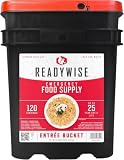
This is where we move from survival rations towards proper prepper meals.
The ReadyWise Grab & Go bag contains 60 servings covering breakfast, lunch and dinner, with freeze-dried foods designed for long-term emergency storage.
The headline attraction is a claimed shelf life of up to 25 years.
ReadyWise says its meals can last for up to 25 years depending on the product and storage conditions and recommends keeping them somewhere cool, dry and away from sunlight and humidity. (ReadyWise)
Interestingly, ReadyWise also says many of its foods can be rehydrated using water at different temperatures, although hot water prepares them more quickly. (ReadyWise)
That matters during a power cut.
I wouldn’t want my entire food supply dependent on boiling water.
Why I like it:
- 60 servings
- Breakfast, lunch and dinner
- Up to 25-year stated shelf life
- Freeze-dried
- Designed specifically for emergency storage
- Grab-and-go storage bag
View the ReadyWise 60-Serving Emergency Food Supply on Amazon
4. EVAQ8 Freeze-Dried Survival Food Kit – Best Survival Meals for Variety


Eating biscuits for weeks might technically provide calories, but it isn’t my idea of a particularly good emergency food strategy.
The EVAQ8 Freeze-Dried Survival Food Kit introduces some proper meal variety.
The six tins include meals such as:
- Beef stew
- Chilli
- Tikka
- Oats
- Eggs
- Vegan options
The manufacturer lists a 25-year shelf life, making this the kind of product you can buy specifically for long-term emergency storage rather than having to rotate every few months.
It does, however, require water.
That’s why I see freeze-dried food as one layer of the stockpile rather than the whole stockpile.
Check the EVAQ8 25-Year Emergency Food Kit on Amazon
5. JUX Freeze-Dried Vegetables – Don’t Forget Nutrition

Emergency food stores can become extremely carbohydrate heavy.
Biscuits. Rice. Pasta. Ration bars.
All useful, but I also want vegetables.
The JUX Freeze-Dried Chopped Vegetable Bundle includes six pots containing red pepper, spinach, carrot, beetroot, garlic and white onion.
Freeze drying removes much of the storage problem associated with fresh vegetables while giving you ingredients that can supplement basic emergency meals.
Again, remember the water requirement.
View the JUX Freeze-Dried Vegetable Bundle on Amazon
6. Heinz Baked Beans – One of the Best Canned Survival Foods

Sometimes good prepper food is just ordinary supermarket food.
A tin of baked beans has several advantages during an emergency.
It doesn’t need refrigeration before opening, contains useful energy and protein and – crucially – can be eaten cold if necessary.
Would I prefer hot beans?
Absolutely.
But if the electricity and gas are unavailable, I can open a tin and eat it.
That makes canned foods an important bridge between specialist survival rations and ordinary household food.
Stock Up on Heinz Baked Beans on Amazon
And put a manual can opener in the emergency cupboard.
An impressive collection of tinned survival food isn’t particularly helpful if your only can opener is electric.
7. Shines Sardines – Best Canned Survival Food for Protein
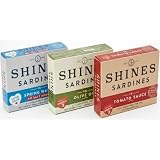
These Shines Sardines in Spring Water come as a pack of 12 cans.
Fish is a useful addition because an emergency stockpile based entirely on biscuits and sweets isn’t nutritionally balanced.
Sardines provide protein and fat in a compact, ready-to-eat form.
These also have no added salt according to the listing.
No cooking. No water. No refrigeration before opening.
That’s exactly the kind of redundancy I want in an emergency food supply.
Check the 12-Pack of Shines Sardines on Amazon
8. Green Giant White Asparagus – More Canned Vegetables


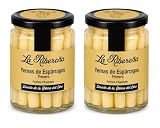
The Green Giant White Asparagus provides another way of getting vegetables into the stockpile without depending on the freezer.
This is a 12-pack of 190g cans, making it easy to store alongside beans, fish and other canned foods.
Again, it’s ordinary food rather than expensive specialist survival food.
That’s an advantage.
A good prepper food storage system should contain foods you can periodically eat and replace rather than discovering a cupboard full of forgotten products ten years from now.
View the Green Giant White Asparagus 12-Pack on Amazon
9. Sauerkraut – An Interesting Addition, But Rotate It

The Cultured Food Company Organic Sauerkraut adds something completely different to the stockpile.
It’s a fermented vegetable product rather than a conventional survival ration.
However, I wouldn’t treat fresh/raw sauerkraut as equivalent to a 25-year emergency tin.
Check the manufacturer’s storage instructions and use-by/best-before information carefully, particularly once opened.
This is something I’d rotate through normal household use, rather than burying at the back of an emergency cupboard indefinitely.
Check the Organic Sauerkraut on Amazon
10. Haribo Tangfastics – Yes, Sweets Belong in My Emergency Food Stockpile

This may look slightly ridiculous alongside freeze-dried survival meals and water purifiers.
I don’t think it is.
Haribo Tangfastics provide quick carbohydrates and something enjoyable to eat.
Food isn’t purely about achieving a theoretically perfect nutrient profile.
If you’re stuck indoors for several days during severe weather, perhaps with children, familiar comfort foods have value.
Sweets are also:
- Ready to eat
- Calorie dense
- Compact
- Easy to portion
- Familiar
- Completely independent of electricity and water
They’re obviously not a meal replacement.
They’re a supplement – and a morale booster.
Add Haribo Tangfastics to Your Emergency Food Box
Water Is the Weak Point in Many Survival Food Packages
You can survive surprisingly well for a period on rather boring food.
You cannot ignore water.
And freeze-dried emergency food actually increases the importance of your water planning because you’re using water for both drinking and food preparation.
My emergency water strategy therefore has three layers:
stored clean water → ability to collect more water → ability to treat suitable additional water.
That gives you redundancy.
11. Two 25L Jerry Cans – 50 Litres of Emergency Water Storage

The simplest emergency water is the water you already have safely stored.
These two 25-litre plastic jerry cans provide 50 litres of storage capacity.
For one person, that’s a substantial drinking-water reserve. For a family, it disappears surprisingly quickly once you include drinking, food preparation and basic hygiene.
That’s why I’d rather have several robust water containers than rely entirely on bottled water scattered around the house.
Check the 2 x 25L Water Jerry Cans on Amazon
Choose containers specifically suitable for potable water if you intend to store drinking water, follow cleaning and storage instructions and rotate stored water appropriately.
Rainwater Collection Could Extend Your Supply – But Don’t Assume It’s Drinkable
If an emergency lasts longer, rain collection becomes interesting.

A water butt, clean collection container or other rainwater system potentially gives you another source for washing, sanitation and – with appropriate treatment – potentially drinking.
But there’s a major caveat.
Rainwater isn’t automatically safe to drink.
It can pick up germs and chemicals from roofs, gutters, storage containers and the environment. The CDC specifically advises that rainwater intended for drinking should be appropriately tested and treated. (CDC)
So I wouldn’t write rain = drinking water into an emergency plan.
I’d write:
rain → collect → assess → appropriately treat/purify → use.
12. Water Purification Tablets – Tiny Emergency Backup


These water purification tablets are extremely easy to store.
The pack contains 80 x 33mg tablets, with the listing specifying one tablet for five litres of water.
That’s potentially a lot of emergency treatment capacity in something that occupies virtually no cupboard space.
I’d keep tablets as a backup even if I owned a good filter.
Mechanical filters can become damaged or clogged.
Redundancy matters.
Check the Emergency Water Purification Tablets on Amazon
Always follow the specific tablet manufacturer’s dosing, contact-time and water-quality instructions.
13. LifeSaver Lifeline – Serious Emergency Water Filtration


For a more substantial emergency water filtration and purifying system, the LifeSaver Lifeline is designed specifically around portable water treatment.
This is listed as filtering up to 5,000 litres.
That kind of capacity makes a reusable filtration system far more interesting for prolonged disruption than relying exclusively on purification tablets.
View the LifeSaver Lifeline Personal Water Filter on Amazon
One thing I’d pay particular attention to when comparing emergency filters is the difference between filter and purifier.
They aren’t necessarily interchangeable terms.
For example, LifeStraw explains that its standard membrane filters protect against bacteria and parasites, whereas its higher-specification purifier additionally targets viruses.
Match the treatment technology to the potential water source rather than assuming any portable filter makes any water safe.
14. LifeStraw Peak Series – Best Compact Personal Filter


The LifeStraw Peak Series Collapsible Squeeze Bottle combines a 650ml bottle with a membrane microfilter.
LifeStraw states that its Peak filter protects against bacteria, parasites, microplastics, silt, sand and cloudiness and lasts for up to 2,000 litres.
That’s useful because it means you’re not restricted to drinking directly through the filter.
I’d see this as particularly useful in a grab bag or as a backup to a larger household filtration system.
Check the LifeStraw Peak 650ml Filter Bottle on Amazon
15. Bachgold Squeeze Filter Bottle – Interesting if Virus Filtration Matters

The Bachgold Squeeze Collapsible Water Filter Bottle is particularly interesting because its listing specifically advertises virus filtration.
It has a one-litre capacity and collapsible design.
If virus removal is important to your intended emergency water strategy, investigate the manufacturer’s independent test results and certifications carefully rather than simply relying on the word filter.
View the Bachgold 1L Filter Bottle on Amazon
16. Purewell Gravity Water Filter – No Electricity Required

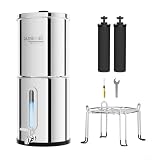

This is the kind of design I particularly like for household emergency planning.
The Purewell 5.7L Gravity Water Filter uses gravity rather than electricity to move water through the filtration system.
That eliminates one dependency.
If the grid is down, the filtration system can still operate.
The stainless-steel countertop unit includes two filters, a stand and water-level window.
Check the Purewell 5.7L Gravity Water Filter on Amazon
For a household planning to remain at home during an extended emergency, I’d generally want a larger gravity system plus a portable personal filter rather than choosing between them.
17. Purewell Reverse Osmosis and UV Survival Purifier

The Purewell Portable Reverse Osmosis Water Filter takes water treatment considerably further, combining a ten-stage system with reverse osmosis and UV.
It’s also advertised with 95% desalination.
That’s potentially attractive for difficult water sources, but more complicated systems introduce another question:
what does the system need to operate?
Always check its power, pumping, filter-replacement and maintenance requirements before making it the centrepiece of an emergency water plan.
Simple equipment has value during a disaster.
View the Purewell Portable RO Survival Water Purifier on Amazon
Store Your Emergency Food Properly
Buying the best survival food is pointless if it’s ruined by moisture, rodents or damaged packaging.
I’d divide the stockpile.
Keep everyday rotating canned foods somewhere cool and dry.
Keep specialist long-term survival foods in their original sealed packaging according to manufacturer instructions.
Then consider additional water-resistant, pest-resistant storage boxes or metal tins for vulnerable products.
ReadyWise, for example, recommends cool, dry storage between roughly 10°C and 21°C and keeping its products away from sunlight and humidity.
I’d also avoid storing the entire emergency food supply in one vulnerable location.
If your emergency is flooding, putting every survival ration in a cardboard box on the garage floor rather defeats the purpose.
Store emergency food above potential flood level.
Don’t Make Your Emergency Food Supply Dependent on Electricity
This is one of my biggest rules.
Suppose your emergency cupboard contains:
- 50 freeze-dried meals.
- Brilliant.
- Except the power is out.
- Your electric hob doesn’t work.
- The kettle doesn’t work.
- And your water supply has stopped.
Suddenly your wonderfully sophisticated survival food system has three points of failure.
That’s why my stockpile includes ready-to-eat ration biscuits, baked beans, sardines and sweets alongside freeze-dried foods.
You should be able to open part of your emergency food supply and eat immediately.
- No cooker.
- No kettle.
- No microwave.
- No generator.
Why I’m Not Convinced a Petrol Generator Should Be the Centre of the Plan


A generator can certainly be useful, but I wouldn’t build my emergency plan around one.
The T-MAX 6000W-E petrol generator you’ve identified provides substantial portable power.
View the T-MAX Petrol Generator on Amazon
But petrol generators introduce dependencies of their own.
You need fuel.
Fuel may be exactly the thing that’s difficult to obtain during a widespread emergency.
Generators are also noisy and combustion generators must never be operated indoors or in unsafe enclosed locations because of the potentially lethal risk from carbon monoxide.
For preparedness, I find solar power stations and solar charging more attractive as part of the mix. They aren’t perfect – output depends on available sunlight and battery capacity – but you aren’t relying on finding a functioning petrol station during the same emergency that’s disrupted everything else.
For essential low-power equipment such as phones, lights and radios, solar storage makes a lot of sense.
18. Vegetable Seeds – Survival Food for a Very Different Kind of Emergency
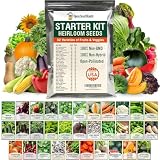
Finally, I’ve included the Grand Seed Growing Kit, containing 30 vegetable varieties.
View the 30-Variety Vegetable Seed Kit on Amazon
I wouldn’t pretend seeds solve an immediate emergency.
If your house has just flooded and you need food tonight, a packet of carrot seeds isn’t terribly helpful.
Growing food requires:
- Time
- Suitable weather
- Soil or growing medium
- Water
- Space
- Knowledge
But emergency preparedness has different time horizons.
First 72 hours: Stored water and ready-to-eat food.
Following weeks: Canned food, ration packs, stored water and filtration.
Longer-term disruption: Larger food stores, water resilience and potentially food growing.
That’s where seeds become interesting.
Food Isn’t the Only Thing in My Emergency Stockpile
Food and water are central, but they’re part of a wider system.
If flooding is the likely threat, I’d want flood protection already stored and ready to deploy, such as water-activated barriers or sandless sandbags. Buying flood defences once the water is already coming up the driveway is leaving things rather late.
For severe winter weather, I’d also keep snow and ice grips for shoes available. Having several weeks of food in the house doesn’t help much if somebody slips on black ice during an essential journey.
A hand-crank emergency radio is another inexpensive layer of redundancy. Mobile networks, broadband and household electricity shouldn’t be assumed to work indefinitely during a major disruption.
And as mentioned above, a solar power station appeals to me more than making a petrol generator the centre of the plan. A sensible combination of stored battery power, solar recharging, torches and power banks provides quiet electricity for essential electronics without relying entirely on fuel.
The recurring principle is redundancy.
Don’t have one way to eat, one way to get water, one way to obtain information and one way to generate electricity.
My Ideal Prepper Food Storage System
If I were assembling this from scratch, I wouldn’t buy £1,000 worth of specialist emergency food on day one.
I’d build it gradually.
Start with water.
Get enough drinking-water storage for the household and add an appropriate filtration or purification backup.
Then build a rotating cupboard of ordinary canned survival food:
Beans, fish, vegetables and other foods you genuinely eat.
Add calorie-dense food that requires no cooking.
Then introduce specialist long-life survival rations.
Finally add freeze dried food for emergencies to extend both shelf life and meal variety.
This approach produces something much more useful than a cupboard containing 200 identical survival pouches.
Emergency Food Stockpile Checklist
My complete system would include:
- Ready-to-eat emergency ration bars or biscuits
- Long-life survival biscuits
- Freeze-dried complete meals
- Freeze-dried vegetables
- Canned beans
- Canned fish
- Canned vegetables
- Sweets/chocolate or other morale foods
- Manual can opener
- Stored potable water
- Large food-grade water containers
- Rainwater collection capability
- Portable water filter
- Household gravity filter/purifier
- Water purification tablets
- Secure dry food storage
- Waterproof storage containers where flooding is a risk
- Basic eating utensils
- Vegetable seeds for longer-term resilience
Then I’d add flood barriers, ice grips, emergency lighting, a hand-crank radio, power banks and solar power capability around that core.
Emergency Food FAQs
What is the best emergency food supply?
The best supply isn’t one product. I’d combine ready-to-eat canned foods and survival rations with long-life freeze-dried meals. That means you can eat immediately if there’s no electricity or water while retaining specialist food capable of extremely long storage.
What food lasts the longest for survival?
Specialist freeze-dried emergency foods can have exceptionally long shelf lives. ReadyWise states that some of its emergency meals have a shelf life of up to 25 years when stored correctly. Always use the shelf life printed on the specific product you’ve purchased.
What is the best canned survival food?
I’d prioritise foods that can be eaten cold and provide useful nutrition: beans, fish and vegetables are excellent starting points.
Is freeze-dried food good for emergencies?
Yes. It’s lightweight, compact and can have an extremely long shelf life. Its weakness is that it usually requires water for rehydration, which is why I’d never rely exclusively on freeze-dried food.
How much emergency water should I store?
The UK Government’s Prepare guidance recommends a minimum of three litres of drinking water per person per day, while suggesting around ten litres per person per day if possible to provide additional water for cooking and hygiene.
Can I drink collected rainwater?
Don’t assume untreated rainwater is safe. It can contain germs and chemicals picked up during collection and storage. Water intended for drinking requires appropriate collection, testing and treatment.
Are water filters and water purifiers the same?
Not necessarily. Some filters remove bacteria and parasites but don’t remove viruses. LifeStraw, for example, distinguishes its membrane filters from its higher-level purifier specifically on virus removal. Check the individual product’s independently verified performance.
What are the best survival meals if there’s no electricity?
Prioritise foods that can be eaten without cooking: ration biscuits, canned beans, canned fish and other ready-to-eat foods. Some freeze-dried products can rehydrate in cold water, but preparation takes longer.
My Emergency Food List: What Would I Buy First?
If starting with nothing, I’d actually buy the water equipment before an enormous survival-food package.
Start with the 50-litre jerry-can set so you have substantial water storage.
Check the 2 x 25L Emergency Water Containers on Amazon
Then add a filtration backup such as the LifeSaver Lifeline.
View the LifeSaver Lifeline Water Filter on Amazon
For food that requires virtually no preparation, I’d add the BDH 18,400-calorie emergency ration tin.
Check the BDH Emergency Food Rations on Amazon
Then I’d build out ordinary canned foods before adding the ReadyWise 60-serving freeze-dried emergency supply for genuine long-term storage.
View the ReadyWise 60-Serving Emergency Food Supply on Amazon
And for a second long-term meal option with a good mixture of recognisable dishes, I’d add the EVAQ8 25-Year Freeze-Dried Food Kit.
Check the EVAQ8 Survival Food Kit on Amazon
The aim isn’t to prepare for some Hollywood-style apocalypse.
It’s much more mundane and useful than that.
Could you feed your household, provide safe drinking water, stay informed and keep a few essential devices powered if normal services disappeared for several days?
Build your stockpile around that question and the best survival food starts looking less like a mountain of specialist prepper meals and more like a sensible mixture of water, ordinary canned food, long-life rations, freeze-dried meals and several backups for when your first plan doesn’t work.

