
Why Asbestos is Still a Concern for Workers in 2022
 In this article, we’ll discuss why even now, in 2022, asbestos is still a risk that workers deal with.
Many years ago, the building material asbestos was commonly used in the majority of new builds. As a naturally heat resistant and insulating fibre, asbestos was used in construction projects all across the western world, until the dangers of asbestos became public knowledge. At that point, it was largely discontinued, but asbestos still continues to persist in many parts of the world.
Even now, in 2022, asbestos is still a risk that workers deal with. It’s important to understand what asbestos is, why it’s dangerous, and why it’s still a problem in some construction projects. You could be entitled to asbestos compensation if you’ve been in contact with the fibres, so it’s important to know what to expect.
What is Asbestos?
So, let’s take a look at the facts. What is asbestos? Asbestos is what we call a carcinogenic material. Initially, it was six different types of fibres that were resistant to corrosion, heat, and electricity. Understandably, this made them invaluable during construction.
Asbestos served as an effective tool for installation. However, it was discovered that inhaling asbestos fibres which were inadvertently released into the atmosphere by interacting with them could cause these fibres to become trapped in the body. Over time, these fibres led to scarring, inflammation of the body, and cancer.
What Are Current Asbestos Regulations?
There are rules and regulations surrounding asbestos in the UK. If you find materials which contain asbestos, and they are in good condition, and not likely to be damaged, then you can leave them in place. However, they have to be monitored and kept an eye on to make sure they are not disturbed.
If you maintain a non-domestic property, then you have a responsibility to manage the asbestos contained in the property if applicable. This means you have to put proper practices in place to protect people who are working in the building.
Naturally, asbestos is no longer a legal material for construction projects. Any asbestos that is found should not be disturbed, as trying to remove it can be incredibly dangerous.
Why Would Workers Still Be at Risk of Asbestos?
Something that people don’t consider, is that even in 2022, there is still a pronounced risk of asbestos in construction projects. Older buildings are being torn down and renovated all the time.
Obviously, this opens up a severe and substantial risk for people who are working on these projects, because if a construction team accidentally unearths asbestos, everybody is put in harm’s way.
Asbestos can travel quickly when exposed to the air, and even small concentrations can have devastating long-term health impacts.
Construction workers and maintenance staff are particularly at risk because they have to often repair and replace parts of a building or simply destroy them all together. These are the workers who are most likely to encounter asbestos.
However, there are things that can be done to mitigate the risk of asbestos. For example, it’s possible to outfit staff with protective equipment, if they know they will be working with asbestos, or to look at existing building plans and see if there was any indication that the construction used asbestos materials. Records have been kept throughout the years, as it has become a matter of public safety to keep asbestos as undisturbed as possible.
Asbestos is still a concern for workers…
So, the thing that most people don’t necessarily understand is that asbestos is still out there. We may not use it in construction anymore, but it’s still part of old buildings, and turns up all the time.
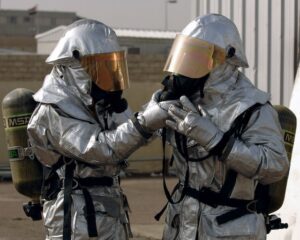
Workers need to be careful how they handle asbestos. It’s still a dangerous material, even after years of inactivity. If approaching known asbestos to remove it, full protective gear should be worn.
It’s the responsibility of building owners and business owners to make sure that staff or tenants are protected from asbestos. However, notifying the local authority if you’re not sure what to do is a good idea.
The information contained within this article should not be used as a substitution for both legal or medical advice. If exposure to asbestos is likely, contact the appropriate legal or medical expert to determine the best course of action.
Related Articles
