
Top 10 Reasons Why Restaurants and Coffee Shops Fail (Study)
Thanks to Jamie Oliver, Gordon Ramsay, Heston and Hugh and the Masterchef winners who go on to open their own restaurants with consummate ease and associated glamour, it seems like everyone wants to open a restaurant these days. The thing is these TV personalities make it all look deceptively easy when the truth is that the cafe and restaurant business, in particular, is far from soft and fuzzy as it appears; it’s ruthlessly Darwinian. Even Gordon and Jamie have a list of failed restaurants on their CVs. You can see Jamie’s here and Gordon’s here, and Gordon has had to close 23 of his 49 restaurants that he has opened in his career. And this infographic from top-business-degrees-net shows that 60% of independent cafes and restaurants fail in the first year, 10% above the normal business failure rate.
Coffee Shop Management Books


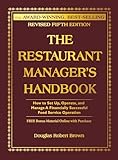

Cafes are a very high-risk business and it seems that many people underestimate just how challenging the restaurant and cafe trade is — and not to prepare or adapt sufficiently — and fail. Would-be cafe or restaurant owners need to understand the common pitfalls to avoid and understand the key success strategies if they are to have a chance of making a success of their cafe or restaurant venture.
So, why do cafes & restaurants fail?
1.General Business Incompetence.
Problem: 46% of businesses fail not because of lack of knowledge of the line of goods and services (e.g. food and drink), but a lack of knowledge of business, e.g. emotional poor/pricing, bad planning, bad financial management etc…

Solution 1: Follow a roadmap to success with these resources produced by successful coffee-shop entrepreneurs.
- The Daily Grind: How To Open and Run a Coffee Shop That Makes Money, by Andrew Bowen and Claire Bowen. Coffee shop bible written by two coffee shop Gurus who have actually setup and established a successful chain of coffee shops. For more support join their coffee-shop start-up community.
2.) A saturated market.
Problem: Are there simply too many restaurants in the area in relation to the supply of customers? The failure rate has been shown by studies to be much higher in areas with a high concentration of restaurants.
Solution: Be very careful to check that the market/local area you are entering is not already saturated.
The following 8 reasons for failure are taken from the research paper, Why Do Restaurants Fail? An analysis of Micro and Macro factors by the UCF Rosen College of Hospitality Management.
3.Lack of capital.
Problem: Surprisingly, the most commonly cited reason for restaurant failure is lack of capital. Due to entry barriers being low, would-be restaurant entrepreneurs attempt to start-up their venture with low capital, just enough to open the doors, but not enough to sustain life during the first few lean months. They often don’t even have enough funds to properly market their business. Try this must-read book.
Solution: Restaurant Success By The Numbers (2nd Edition): A Money-Guy’s Guide to Opening the Next New Hot Spot. It was written by an accountant turned restaurateur who gives specific financial advice on how to succeed in the first year and beyond. It gives expert advice when making key decisions such as: funding, number-crunching, menu-making and turning a profit. Read it now at Amazon.
4.Location.
Problem: Another common reason for restaurant failure was being situated in the wrong location, with either the wrong demographic to suit their offering or not enough foot-fall. This was not always under their control as the socio-economic and commercial factors could lead to a change in customer profile and volume over-time that could not be reasonably foreseen.
Solution: How to Choose a Location for Your Restaurant or Cafe
5.Quality of life.
Problem: Are too many people sucked in by the seemingly wonderful charming and fanciful lives that our celebrity chefs have? Are too many people fooled into thinking it will be anything other than a hard slog? The study shows that most restauranteurs work 60 hour weeks and hence the quality of life or lack of-of was a key reason that owners closed restaurants.

Solution: Share the load and find a business partner using this very helpful guide.
6. Lack of industry experience.
Problem: Most successful restauranteurs tend to have previous industry or related experience. For advice on how to manage restaurant staff effectively and legally try this book.
Solution: Learn the trade with a franchise. According to Francdocs only 2 to 4% of franchises with a proven franchise concept fail, compared to a 60% failure rate for independent restaurants. Why not start your business as part of a franchise, to learn the trade, and once you become a master, you can branch out on your own with a much more masterful skillset behind you.
7.Fail to execute on the brand.
Problem: The study found that one of the key reasons for restaurant closure was a failure to create and build a brand. They did not incorporate the 12 Ps of restaurant branding,( Place, Product, Price, People, Promotion, Promise, Principles, Props, Production, Performance, Positioning, and Press), and failed businesses also intended to incorporate all fives senses into the brand experience to create emotional connection and moments of truth. Also, take full advantage of social media in order to execute on your restaurant brand.
Solution: The Daily Grind: How To Open and Run a Coffee Shop That Makes Money, by Andrew Bowen and Claire Bowen. Coffee shop bible written by two coffee shop Gurus who have actually setup and established a successful chain of coffee shops. For more support join their coffee-shop start-up community
8.Name of the restaurant is too long.
Problem: Typically restaurant names have 13 letters, comprising 8 consonants and 5 vowels. A restaurant that has a name that is too long and not descriptive has been shown to be less likely to succeed than a restaurant with a name that is brief, descriptive and attractive.
Solution: Try SquadHelp, an innovative and lively crowdsourcing platform that harnesses the talent of over 200,000 creatives to name your business, brand or product.
9.Lack of differentiation.
Problem: Fields (2007) has found that a brand concept that is not differentiated is one of the prime reasons for restaurant failure.
Solution 1: Read this good article on brand differentiation: 7 new ways to stand out: A brand differentiation guide
Solution 2:
10.Poor financial controls.
Problem: Most restaurants that have failed had prime costs, (labour costs and food costs), that exceeded 60% of revenues which indicated a greater potential for failure.
Solution 1: Restaurant Success By The Numbers (2nd Edition): A Money-Guy’s Guide to Opening the Next New Hot Spot. It was written by an accountant turned restaurateur who gives specific financial advice on how to succeed in the first year and beyond. It gives expert advice when making key decisions such as: funding, number-crunching, menu-making and turning a profit. Read it now at Amazon.
Solution 2: Get better control of staffing costs and operational finances by using a restaurant staff scheduling app that automatically calculates AND forecasts future staff costs.
11. Paying unrealistically high rent for a prime location.
Problem: Many of the restaurants that fail were shown to have paid too high a rent for the revenues that could be achieved.
Solution 1: The researchers suggest that the rule of thumb for rent/lease/mortgage fixed costs is 7-9% of revenues.
Solution 2: Restaurant Success By The Numbers (2nd Edition): A Money-Guy’s Guide to Opening the Next New Hot Spot. It was written by an accountant turned restaurateur who gives specific financial advice on how to succeed in the first year and beyond. It gives expert advice when making key decisions such as: funding, number-crunching, menu-making and turning a profit. Read it now at Amazon.
Additional resources
1. Restaurant & Cafe Employee Handbook UK 2019 by Thecareercafe.co.uk: This handbook enables you to clearly communicate to your staff from the outset the policy and procedures that they must follow while working in your establishment. It contains restaurant specific policies relating to: Tips and Gratuities, Employee Meals, Cleanliness, Treatment of Visitors and Guest, Customer Complaints and Attendance and Punctuality.
Coffee Shop Management Books

